Last updated: September 2026. Technology in 2026 is moving fast, but a handful of shifts explain most of what is changing in the phones, laptops, and services you actually use. This plain-English guide covers the latest tech trends in 2026, with practical examples and an India lens where it matters.
At a glance: the biggest tech trends in 2026
- On-device AI: more AI workloads are moving from cloud servers to phones and laptops.
- AI agents: assistants are starting to complete multi-step tasks with user approval.
- Foldables: folding phones are moving closer to mainstream premium devices.
- 5G: the focus is shifting from basic coverage to home broadband and connected devices.
- Battery gains: higher-density cells and more efficient chips are improving endurance.
- AI PCs: NPUs are becoming standard, but they are not the only thing that matters when buying a laptop.
1. AI moved onto the device
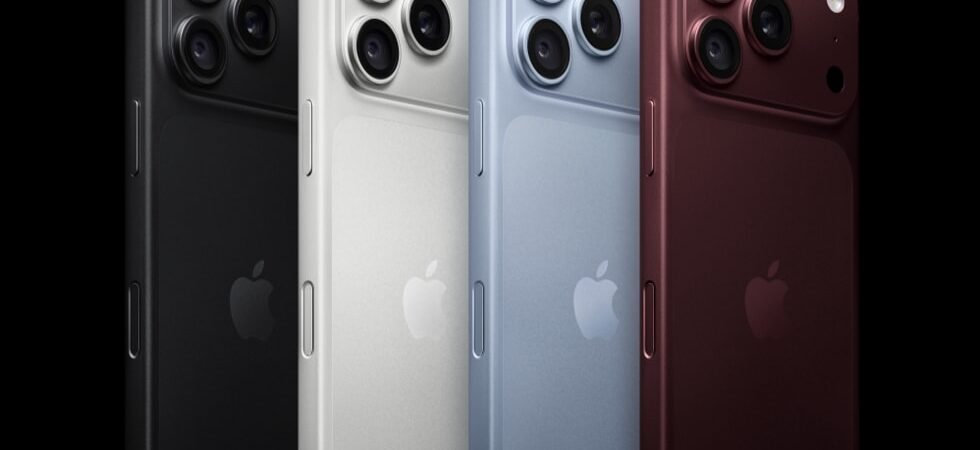
The biggest change in 2026 is where AI runs. For the last few years the useful AI features lived in the cloud, which meant a round trip to a server for every request. This year flagship phones and laptops ship with dedicated AI processing blocks (Apple’s A20 Pro is built on a 2nm process, and Qualcomm and MediaTek have their own AI-focused designs), so more work happens on the device itself.
In practice that means faster photo edits, offline transcription and translation, smarter autocomplete, and voice assistants that can act on what you say rather than just answer. It also has a privacy upside: data that never leaves your phone cannot be logged on someone else’s server. The trade-off is that the newest features are often locked to the latest, most expensive hardware.
If you want the background on the chips behind this, see our explainer on phone processors.
2. Assistants are becoming “agents”
A related shift: AI assistants are being given the ability to complete multi-step tasks instead of just chatting. The industry term is an “agent” — software that can, for example, compare prices across apps, fill a form, draft and send a reply, or book something, with your approval at each step.
This is early and uneven. The demos are impressive; the day-to-day reliability varies a lot by task and by app. Our view is that agents are genuinely useful for narrow, repetitive jobs in 2026 and still need close supervision for anything that spends money or sends messages on your behalf.
3. Foldables went mainstream
Foldable phones stopped being a novelty this year. Prices on older folding models have come down, durability has improved, and in 2026 even Apple entered the category with the iPhone Duo. Android makers now offer folding phones at several price points rather than one halo model.
They are still premium devices with premium compromises — a visible crease on most panels, higher repair costs, and more weight — but “should I buy a foldable?” is now a reasonable question for a mainstream buyer, not just an enthusiast.
4. 5G is close to everywhere in urban India
India’s 5G rollout is now in its mature phase. Coverage across cities and most large towns is broad, tariffs have settled, and 5G is the default on nearly every new phone — including budget models. Our guide to 5G phones under ₹15,000 covers what you actually get at the low end.
The next stage is less about raw speed on your handset and more about what sits on top of the network: fixed wireless home broadband as an alternative to a wired connection, and industrial and IoT uses. For most people the practical benefit in 2026 is simply that a fast connection is now normal rather than a premium feature.
5. Batteries and charging quietly got better
Away from the headlines, 2026 flagships and upper-midrange phones adopted higher-density battery chemistry (often described as silicon-carbon), which fits more capacity into the same space. Combined with more efficient chips, real-world battery life on new phones is noticeably better than two years ago, and very fast wired charging has spread down into the mid-range.
If the numbers on a spec sheet confuse you — mAh, watts, C-rating — our battery and charging explainer breaks them down.
6. PC hardware: more performance per rupee at the low end
On the desktop side, the current generation of graphics cards from NVIDIA, AMD, and Intel pushed capable 1080p gaming to lower price points, and Intel’s Arc line in particular has made the budget segment competitive again. Our 1080p graphics card guide tracks the current picks and prices.
The other PC story of 2026 is the “AI PC” label on laptops. It refers to a machine with a neural processing unit for on-device AI. It is real, but for most buyers it is not yet a reason on its own to upgrade — battery life, screen quality, and RAM still matter more day to day. See how much RAM you actually need.
7. Gaming: a big year for releases
2026 is one of the most loaded release years in a while, headlined by Grand Theft Auto VI on 19 November. That single launch is expected to drive console and storage purchases through the festive season. For a running list of what is worth buying, see our best PS5 games and best PC games roundups.
The quick version
- AI on the device — faster, more private, but tied to new hardware.
- Agents — useful for narrow tasks, still need supervision.
- Foldables — now a mainstream option, still premium-priced.
- 5G — effectively the default in urban India; focus shifts to home broadband and IoT.
- Batteries — silicon-carbon cells and efficient chips mean better real-world life.
- Budget PC gaming — more frames per rupee; “AI PC” is not yet a must-have.
- Games — a stacked release calendar led by GTA VI in November.
Frequently asked questions
Do I need to buy a new phone to use AI features in 2026?
For basic AI features — cloud-based assistants, photo tools in apps — no. For the fastest on-device features that work offline, you generally need a current flagship or a recent upper-midrange phone with a dedicated AI processing block. Mid-range phones get a subset of these features.
Is a foldable phone a sensible buy now?
It can be, if you value the larger screen for reading, multitasking, or media and you are comfortable with a higher price and higher repair costs. If you mainly want the best camera or battery life for the money, a conventional flagship still makes more sense.
What does “AI PC” actually mean?
It means the laptop has a neural processing unit (NPU) that can run AI tasks locally, more efficiently than the main processor. It is a genuine capability, but in 2026 it is not a strong reason to upgrade on its own — judge a laptop on its screen, keyboard, RAM, and battery first.
Has 5G made a real difference to everyday use in India?
Mostly it has made a fast, low-latency connection normal rather than special. The bigger changes — 5G home broadband, industrial IoT — are rolling out gradually and matter more over the next couple of years than in day-to-day phone use today.
Related tech guides
- Snapdragon vs Dimensity vs Exynos: Phone Processors Explained
- Phone Battery and Charging Explained: mAh, Watts and Fast Charging
- Best 5G Smartphones Under ₹15,000 in India
- How Much RAM Do You Actually Need?
Prices, model names, and availability mentioned here are accurate to the best of our knowledge as of September 2026 and can change — check the manufacturer’s official page before buying.