Latest posts
-
GPT-6 Astra: What It Can Really Do, Benchmarks, Computer Use & AI Infrastructure

GPT-6 Astra explained simply: key capabilities, computer-use benchmarks, everyday work examples, game and animation workflows, and the NVIDIA GB200 NVL72 liquid-cooling architecture behind high-density AI infrastructure.
-
Refresh Rate Explained: 60Hz vs 90Hz vs 120Hz vs 144Hz
If you are buying a phone, laptop, monitor or gaming display, you have probably seen refresh-rate numbers such as 60Hz, 90Hz, 120Hz and 144Hz. But what do they actually mean, and is a higher refresh rate always better? This guide explains refresh rate in simple terms, how it affects scrolling and gaming, how it differs…
-
Latest Tech Trends in 2026: What Is Actually Changing

A plain-English look at the technology trends that matter in 2026 – on-device AI, AI agents, mainstream foldables, 5G in India, better batteries, budget PC gaming and a stacked year for games.
-
AMOLED vs LCD vs IPS: Which Phone Display Is Better?

AMOLED, IPS LCD and TFT screens explained in plain language — how they differ, which looks better, which saves battery, and what to look for when buying a phone.
-
Snapdragon vs Dimensity vs Exynos: Phone Processors Explained
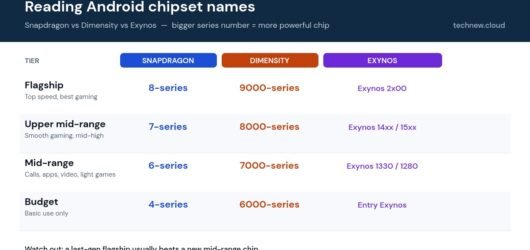
What phone chipset names actually mean — Snapdragon, MediaTek Dimensity, Samsung Exynos, Apple and Google Tensor — how to read the model numbers, and how much the chip really matters.
-
How Much RAM Do You Actually Need? (Phone and Laptop)
A straight answer on RAM — how much you need in a phone and a laptop in 2026, whether “RAM expansion” features help, and when more memory is worth paying for.
-
Phone Battery and Charging Explained: mAh, Watts and Fast Charging
What mAh and charging watts really mean, whether fast charging harms your battery, and the habits that actually make a phone battery last longer.